
Views: 0 Author: Site Editor Publish Time: 2026-08-04 Origin: Site


A rubber bushing is one of those small components that most drivers never notice until something starts to feel wrong. Yet in real vehicle operation, it plays a major role in comfort, stability, noise reduction, and part protection. Found in suspension systems, control arms, sway bars, shock mounts, engine mounts, and other key connection points, a rubber bushing acts as a flexible buffer between metal parts. It helps absorb shock, reduce vibration, limit unwanted movement, and prevent direct metal-to-metal contact. For workshops, parts distributors, and vehicle owners, understanding how a rubber bushing works is important not only for maintenance but also for choosing the right replacement strategy before a minor issue turns into a larger repair.
Modern vehicles depend on many connected systems working smoothly together. While large components like shocks, arms, and mounts get most of the attention, bushings are what allow these parts to operate with controlled movement. Without a properly functioning rubber bushing, vibration travels more easily through the vehicle, handling becomes less precise, and nearby components may wear faster than expected.
In practical terms, rubber bushings help vehicles do three things well:
· Absorb road shock
· Reduce vibration and noise
· Maintain correct alignment and motion control
That combination is especially important in suspension and chassis applications. A worn bushing can quietly affect steering response, braking stability, tire wear, and ride quality long before complete failure happens.
At its core, a rubber bushing is designed to isolate motion. It sits between two hard components, usually metal, and cushions the load transferred between them. Instead of allowing harsh force to pass directly from one part to another, the rubber material compresses and flexes in a controlled way.
1. Vibration isolation
The rubber material dampens vibration generated by the road, engine, or suspension movement.
2. Noise reduction
A good bushing helps reduce rattling, knocking, and transmitted road noise inside the cabin.
3. Controlled flexibility
Some movement is necessary in suspension and mounting points. Bushings allow this movement without excessive looseness.
4. Component protection
By preventing direct contact between metal parts, a rubber bushing helps reduce wear on connected components.
5. Improved comfort and handling balance
A vehicle needs both comfort and stability. Bushings help manage that balance by softening impact while maintaining part positioning.
In short, a rubber bushing does far more than fill a gap. It supports the behavior of the entire system around it.
Rubber does not last forever. Heat, road salt, oil contamination, repeated impact, and age can all cause deterioration. The challenge is that bushing wear often develops gradually, which means many drivers adapt to the change without realizing there is a problem.
Here are some of the most common rubber bushing symptoms:
Symptom | What It May Indicate | Why It Happens |
Clunking or knocking noise | Excess movement in suspension or mounting points | Rubber has cracked, loosened, or separated |
Increased vibration | Reduced damping ability | Rubber has hardened or worn out |
Poor steering response | Loss of control arm or suspension stability | Bushing can no longer hold alignment properly |
Uneven tire wear | Geometry changes during driving | Worn bushings allow unwanted movement |
Squeaking noises | Dry or deteriorated contact surfaces | Aging rubber or contamination |
Harsh ride quality | Less shock absorption | Rubber has stiffened or failed |
These symptoms do not always point only to bushings, but bushings are often one of the first areas technicians inspect when a vehicle feels unstable, noisy, or rougher than normal.
Not every old rubber bushing needs immediate replacement. Some surface aging is expected over time. The key is knowing when wear has moved beyond appearance and started affecting performance.
· Slight hardening of the rubber
· Minor surface cracking
· No unusual noise during driving
· No visible separation from the sleeve or housing
· Deep cracks through the rubber body
· Rubber tearing or missing sections
· Bushing movement beyond designed limits
· Visible separation from the inner or outer metal sleeve
· Clear handling, braking, or alignment changes
A simple visual inspection can reveal a lot, but in many cases, the most important clue is how the vehicle behaves on the road. If the rubber bushing no longer performs its isolation function, replacement should not be delayed for too long.
There is no single answer to rubber bushing service life, because working conditions vary widely. Some bushings may last many years under moderate use, while others wear much faster in harsh environments.
Several factors influence lifespan:
Vehicles used on rough roads, construction routes, or uneven terrain usually place more stress on suspension and chassis bushings than vehicles driven mainly on smooth highways.
Extreme heat can accelerate rubber hardening and cracking. Cold weather can reduce flexibility. In humid or coastal areas, contamination and corrosion around surrounding parts may also contribute to faster wear.
Rubber does not react well to constant exposure to leaking oil, fuel residue, or aggressive chemicals. Contamination can cause swelling, softening, or faster breakdown.
Heavy loads, frequent braking, fast cornering, and repeated impact all increase stress. Commercial vehicles and performance-driven applications may see shorter bushing life.
Not all bushings are made to the same standard. Rubber compound formulation, bonding quality, dimensional control, and manufacturing consistency all affect service life.
In many everyday passenger vehicles, bushings may perform reasonably well for several years, but periodic inspection remains the safer approach. A part may still look acceptable while already allowing more movement than intended.
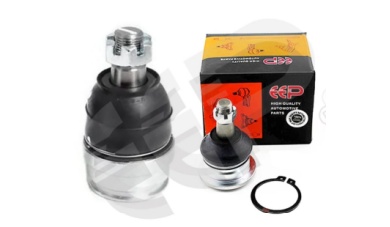
A rubber bushing is a small part, but it influences larger systems. When it wears out, the connected parts start working under abnormal conditions.
That can lead to issues such as:
· Faster wear on control arms and joints
· Reduced suspension stability
· Misalignment and premature tire wear
· Extra load on mounts and brackets
· More cabin noise and vibration
· Less predictable braking and cornering behavior
For repair shops and fleet operators, this matters from a cost perspective. Replacing a worn rubber bushing early is usually more economical than waiting until tires, alignment, or adjacent components are also affected.
There is no universal mileage rule that fits every vehicle, but replacement should be considered when any of the following happens:
· The bushing shows deep cracking or separation
· The vehicle has obvious noise or vibration related to the area
· Handling or alignment has changed
· The suspension is already being disassembled for related repairs
· The technician confirms excessive play during inspection
Sometimes the most efficient decision is preventive replacement. For example, if control arms, links, or mounts are already removed during a larger repair, replacing aged bushings at the same time can reduce future labor cost.
In many suspension-related applications, replacing in pairs is a practical choice. If one side has worn significantly, the other side may not be far behind. Balanced performance matters, especially for steering and chassis stability.
A rubber bushing may be small, but its function is not. It helps reduce noise, absorb vibration, protect surrounding components, and maintain controlled movement in key vehicle systems. Once wear begins, symptoms such as clunking, looseness, vibration, steering changes, or uneven tire wear can gradually become more serious if left unaddressed. Understanding the role of a rubber bushing, recognizing the early warning signs, and following sensible replacement timing can help drivers, workshops, and buyers avoid larger costs and maintain better vehicle performance over time. At Guangzhou Eep Auto Parts Co., Ltd., we believe practical parts knowledge is just as important as the parts themselves. If you are reviewing replacement options, comparing product quality, or planning sourcing for automotive suspension and chassis components, you are welcome to learn more from our team and explore solutions that fit your market and service needs.
Yes. If the bushing no longer holds suspension components in the correct position, alignment angles can shift during driving. This may lead to uneven tire wear and less stable handling.
Sometimes, yes. Not all failing bushings make obvious noise. Some mainly cause vibration, steering looseness, or geometry changes, so inspection should not depend only on sound.
A practical approach is to inspect them during routine suspension checks, tire replacement, alignment service, or whenever handling and ride quality noticeably change.
Buyers should pay attention to material consistency, dimensional accuracy, bonding quality, application matching, and supplier reliability rather than making decisions based only on low price.