
Views: 0 Author: Site Editor Publish Time: 2026-08-03 Origin: Site


When people talk about vehicle performance, they often focus on the engine, fuel economy, or exterior design. But in real-world driving, the components that transfer power from the engine to the wheels are just as important. A vehicle can have a strong engine and still perform poorly if the transmission-related parts are worn, mismatched, or not functioning efficiently. That is why understanding components such as the drive shaft, CV joint, clutch, and wheel hub bearing is essential for anyone involved in vehicle maintenance, repair, distribution, or parts sourcing. These parts do different jobs, yet they work together to support smooth power delivery, stable handling, and long-term reliability. In this article, we explain what each component does, how it contributes to the overall drivetrain system, and why choosing the right quality level matters for everyday driving and professional aftermarket service alike.
Transmission and drivetrain components are often hidden beneath the vehicle, so they do not always receive attention until a problem appears. However, these parts are under continuous stress. They rotate, flex, absorb friction, and support vehicle weight while helping transfer torque under different road conditions.
A healthy drivetrain system helps deliver:
· consistent power transmission
· smoother acceleration
· lower vibration and noise
· improved safety and handling
· longer service life for connected components
Once one part begins to fail, the impact often spreads. For example, a damaged CV joint can increase vibration, which may put extra strain on the drive shaft and wheel hub assembly. Likewise, a worn clutch can affect power transfer and driving comfort, especially in manual transmission vehicles.
The drive shaft function is to transmit torque from the transmission or transfer case to the differential, and then ultimately to the wheels. In rear-wheel-drive, four-wheel-drive, and some all-wheel-drive vehicles, the drive shaft plays a central role in carrying rotational force over a distance.
Because the drive shaft must rotate at high speed, it needs to remain balanced and structurally sound. Even a minor imbalance can create noticeable vibration, especially at higher speeds. In practical terms, this means the drive shaft is not just a connector. It is a precision component that directly affects ride quality and drivetrain efficiency.
A well-functioning drive shaft supports:
· efficient torque transmission
· stable operation at varying speeds
· reduced driveline vibration
· smoother engagement between drivetrain components
If the drive shaft is bent, worn, or improperly aligned, drivers may notice shuddering, clunking noises, or vibration during acceleration. Over time, these symptoms can reduce comfort and increase wear in nearby parts.
Some of the most common warning signs include:
1. Vibration under acceleration
2. Clunking when shifting gears
3. Squeaking from under the vehicle
4. Difficulty turning in some drivetrain setups
These issues should not be ignored, because a failing drive shaft can eventually affect safety and drivability.
A CV joint, or constant velocity joint, allows the drive axle to transmit power through a variable angle while maintaining a consistent rotational speed. This is especially important in front-wheel-drive vehicles, where the wheels must both steer and receive power at the same time.
Without a CV joint, smooth power delivery during cornering and suspension movement would be much harder to achieve. The CV joint is designed to handle motion and angle changes while keeping torque transfer steady.
In modern vehicle design, comfort and control matter as much as raw performance. The CV joint helps make both possible by allowing flexibility in the drivetrain without interruption in power delivery. This is particularly critical when the suspension moves up and down or when the steering angle changes.
A damaged CV joint often creates a clicking sound during turns. That is one of the most recognized CV joint symptoms, and it usually indicates wear inside the joint or damage to the protective boot.
The CV joint is protected by a rubber or thermoplastic boot filled with grease. This boot keeps lubrication in and contaminants out. Once the boot cracks or tears, grease leaks out and dirt enters, accelerating wear.
If caught early, replacing a damaged boot may help preserve the joint. If left too long, the entire CV joint or axle assembly may need replacement.
The clutch function in a vehicle is to engage and disengage power flow between the engine and the transmission. In manual transmission vehicles, the clutch allows the driver to change gears smoothly by temporarily separating the engine from the drivetrain.
Although the clutch may seem like a simple pedal-operated part, it is actually a friction-based system that must handle heat, pressure, and repeated engagement cycles. Its condition has a major influence on launch performance, gear shifts, and overall driving feel.
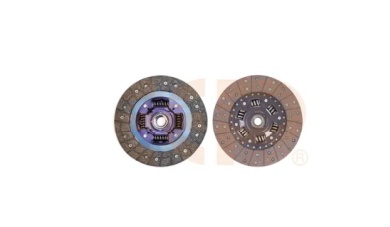
When the driver presses the clutch pedal, the clutch disc separates from the flywheel, interrupting power transfer. When the pedal is released, contact is restored and torque flows back through the transmission.
A healthy clutch helps achieve:
· smooth gear changes
· controlled vehicle launch
· better engine-to-transmission coordination
· reduced drivetrain shock
A worn clutch may slip under load, make shifting difficult, or create a burning smell. These are signs that friction material is wearing thin or that related clutch components need inspection.
Watch for these common symptoms:
· engine revs rise without matching acceleration
· difficulty engaging gears
· soft, hard, or inconsistent pedal feel
· burning odor during heavy use
Clutch quality matters not only for performance but also for durability, especially in vehicles that face stop-and-go traffic, frequent loading, or commercial use.
The wheel hub bearing function is often underestimated. This component allows the wheel hub to rotate smoothly while supporting the vehicle’s weight and maintaining wheel alignment. It plays a direct role in steering stability, rolling efficiency, and safety.
Unlike some other drivetrain parts, wheel hub bearings are constantly exposed to load, road shock, moisture, and contamination. That makes manufacturing precision and sealing quality especially important.
Although the drive shaft, CV joint, clutch, and wheel hub bearing perform different tasks, they belong to a connected mechanical chain. Power begins at the engine, moves through the clutch and transmission, continues along the drive shaft or axle system, passes through the CV joints where needed, and finally reaches the wheels supported by wheel hub bearings.
The table below gives a simple overview:
Component | Primary Function | Common Failure Symptoms | Effect on Vehicle |
Drive Shaft | Transfers torque through the drivetrain | Vibration, clunking, imbalance | Poor smoothness, reduced drivetrain efficiency |
CV Joint | Delivers power through changing angles | Clicking on turns, grease leakage | Rough turning, axle-related power loss |
Clutch | Connects and disconnects engine power | Slipping, hard shifting, burning smell | Poor gear engagement, weak acceleration |
Wheel Hub Bearing | Supports wheel rotation and load | Humming, grinding, looseness | Reduced stability, unsafe wheel operation |
Seen together, these parts form a practical chain of motion. A problem in one area may appear as vibration, noise, or handling instability somewhere else, which is why correct diagnosis is so important.
Understanding drivetrain and transmission-related components is not only useful for engineers or mechanics. It also helps buyers, distributors, and vehicle owners make better decisions about maintenance, replacement, and sourcing. The drive shaft supports torque transfer, the CV joint maintains smooth power delivery through movement, the clutch manages the connection between engine and transmission, and the wheel hub bearing ensures stable wheel rotation under load. Each part contributes to vehicle safety, comfort, and efficiency in its own way, and each deserves attention when performance problems begin to appear. At Guangzhou Eep Auto Parts Co., Ltd., we believe that better parts decisions start with clearer technical understanding. If you would like to learn more about transmission and drivetrain components, compare suitable replacement solutions, or discuss product requirements for your market, you are welcome to contact our team for further information in a practical and professional way.
The main function of a drive shaft is to transfer torque from the transmission or differential to the wheels. It helps ensure that engine power reaches the drivetrain efficiently and smoothly.
The most common CV joint symptoms include clicking noises during turns, grease leakage around the boot, vibration while driving, and reduced smoothness during acceleration or cornering.
A slipping clutch usually causes the engine speed to increase without a matching increase in vehicle speed. Drivers may also notice weak acceleration, a burning smell, or difficulty under heavy load.
A wheel hub bearing is important because it supports the wheel’s rotation and helps maintain vehicle stability. If it becomes worn, it may cause noise, looseness, uneven tire wear, and reduced control.