
Views: 0 Author: Site Editor Publish Time: 2026-02-23 Origin: Site


Vehicle repairs often hit your wallet at the worst possible times. You check the dealership price for a replacement component, then compare it to an online marketplace, and the difference shocks you. Why does one box cost $400 while the other costs $120? This massive 30–60% price gap creates immediate friction for every car owner. However, choosing the cheaper option isn't always a victory, and paying full price isn't always necessary.
This decision goes beyond simply saving money; it requires balancing Total Cost of Ownership (TCO) against reliability risks. Installing a sub-par sensor can lead to cascading engine failures that cost thousands to fix. Conversely, overpaying for a simple branded bracket is a waste of capital that offers no performance benefit. You need a strategy that separates critical engineering from basic hardware.
This guide moves beyond generic "pros and cons" lists. We provide a strategic decision matrix for sourcing auto engine parts. You will learn how to evaluate purchases based on vehicle age, component criticality, and long-term value, ensuring you never overpay for a logo or underpay for reliability.
Terminology Matters: "OEM" and "Genuine" are not identical; "OE" (Original Equipment) parts offer the best value/quality balance (e.g., buying Bosch directly instead of in a BMW box).
The "Criticality" Rule: Always choose OEM/OE for complex electronics, sensors, and internal engine components where precision is non-negotiable.
The Aftermarket Advantage: Premium aftermarket brands often fix known factory design flaws in suspension, cooling, and braking systems.
Warranty Rights: Under the Magnuson-Moss Warranty Act, using aftermarket parts does not automatically void your vehicle's factory warranty.
Understanding the automotive supply chain unlocks significant savings. Most drivers assume the automaker manufactures every nut and bolt in the vehicle. In reality, car companies are primarily assemblers and designers. They rely on a vast network of external suppliers to build the actual components. Knowing who made the part allows you to bypass the dealership markup without sacrificing quality.
Genuine parts come in the automaker’s branded box (e.g., Ford, Toyota, BMW). When you buy these at a dealership counter, you receive the exact component installed on the vehicle when it rolled off the assembly line. It carries the automaker's logo and part number.
However, the reality is that the automaker rarely manufactures these items. They contract Tier 1 suppliers to build them. The high price tag on Genuine parts reflects the logo licensing, the dealership's overhead, stringent warranty validation processes, and complex supply chain logistics. While they offer peace of mind, you often pay a premium for the packaging rather than the engineering.
This category represents the "sweet spot" for savvy owners. OEM or OE parts are manufactured by the same company that built the part for the factory assembly line—brands like Denso, NGK, Bosch, or Lemförder. The physical component is often identical to the Genuine part.
The difference lies in the distribution. Instead of going into a BMW box, the part goes into a Bosch box. In many cases, you can even see where the automaker's logo was ground off the casting to sell it legally as an OEM part. The value proposition here is undeniable: you get identical quality to Genuine parts at a 20–40% lower cost. You receive the factory-level engineering standards without subsidizing the dealership's marketing budget.
The aftermarket spectrum is vast and inconsistent. It includes any part made by a company that was not the original supplier for that specific vehicle component. This range stretches from "White Box" economy parts (high risk) to "Premium/Performance" brands that equal or exceed stock specifications.
Innovation is a surprising benefit of the high-end aftermarket. Factory parts sometimes have inherent design flaws, such as plastic cooling pipes that crack after 50,000 miles. Premium aftermarket companies often reverse-engineer these failures. They might release an upgraded version using durable aluminum instead of brittle plastic found in the original auto engine parts. In these specific scenarios, the aftermarket part is actually superior to the Genuine replacement.
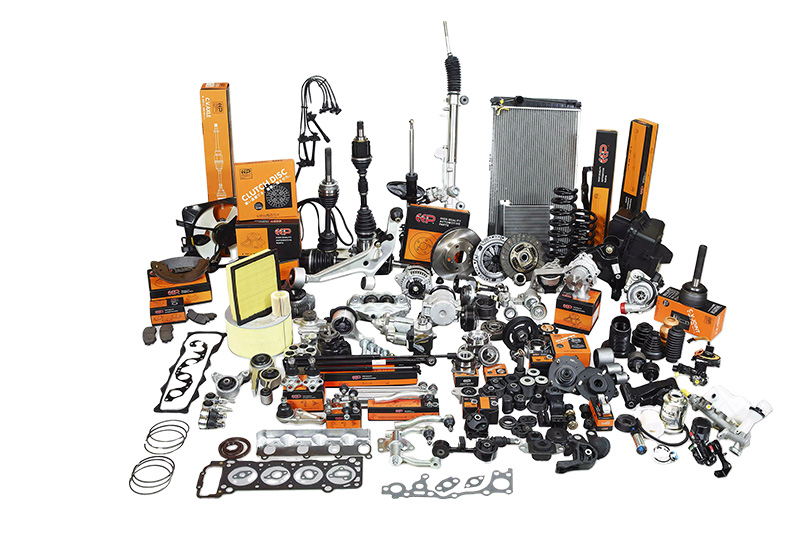
Smart maintenance isn't about buying the cheapest part; it is about protecting your investment. To make the right choice, you must calculate the Total Cost of Ownership (TCO) for the repair. This equation involves more than the receipt total.
Calculate your risk using this formula: (Part Cost + Labor Cost + Potential Re-work Risk). The labor involved in the repair often dictates the quality of the part you should buy.
High Labor, Low Part Cost: Consider a rear main seal. The part might cost $20, but accessing it requires removing the transmission—a 10-hour job costing $1,000 in labor. If you save $10 on a cheap seal and it leaks six months later, you must pay the $1,000 labor cost again. In high-labor scenarios, always buy OEM. The risk of premature failure far outweighs the minor savings.
Low Labor, High Part Cost: Conversely, consider easily accessible components like air filters or cabin filters. You can swap these in five minutes. If an aftermarket filter fits poorly, you can replace it immediately with zero financial ruin. Here, the aftermarket offers a better Return on Investment (ROI).
Your choice of parts leaves a paper trail that future buyers will scrutinize. Using distinct auto engine parts for passenger cars—specifically luxury or enthusiast models like Porsches or M-series BMWs—helps maintain residual value. Enthusiast buyers look for "service history with OE parts."
A folder full of receipts for "generic" parts signals to a buyer that the previous owner cut corners. Documenting OEM replacements reassures future buyers that you performed diligent, factory-spec maintenance. This can add thousands to the final sale price of a collectible vehicle.
Time is money, especially if you are paying a mechanic by the hour. Universal-fit aftermarket parts often require modification or "hacking" to install. A generic oxygen sensor might need its wires spliced because it lacks the correct connector. OEM parts guarantee "Plug-and-Play" fitment. They align perfectly with mounting points and harness clips, significantly reducing shop labor hours and frustration.
Not all components are created equal. Modern vehicles rely on a complex network of computers and mechanical systems. We can categorize parts into three distinct tiers to simplify your buying decision.
| Category | Components | Strategy |
|---|---|---|
| Category A: Strict OEM/OE Mandatory | Crankshaft sensors, MAF sensors, ECU modules, VVT solenoids, SRS sensors. | Buy Genuine or OEM only. Modern ECUs have extremely tight voltage tolerances. Aftermarket electronics often cause "Ghost Codes" or Check Engine Lights even when functioning. Safety items (airbags/seatbelts) require validated crash testing. |
| Category B: Aftermarket / OE Recommended | Brake pads, rotors, shock absorbers, exhaust systems, cooling hoses. | Premium Aftermarket is safe. Performance brands often exceed OEM stopping power and longevity. Companies specializing in suspension frequently offer better damping than factory shocks. |
| Category C: Situational (Age Dependent) | Alternators, starters, power steering pumps, aesthetic trim. | Remanufactured or OE. For Japanese vehicles, stick to OE. For older domestic cars, quality aftermarket remanufactured units are acceptable. |
For engine management, deviation is dangerous. Components like mass airflow (MAF) sensors and variable valve timing solenoids send critical data to the Engine Control Unit (ECU). If an aftermarket sensor reads slightly out of range, the car may run rich, waste fuel, or trigger warning lights.
Crash safety is another non-negotiable area. SRS sensors, seatbelt pretensioners, and structural body panels must perform exactly as designed during an impact to ensure proper crumple zone behavior. Never gamble with safety systems.
Wear items are where the aftermarket shines. Companies dedicated solely to braking (like Brembo or Akebono) often produce pads and rotors that outperform the generic compound the manufacturer selected to keep costs down. Similarly, aftermarket exhaust systems can offer better flow and corrosion resistance than stock mild-steel pipes.
This category requires nuance, particularly when sourcing auto engine parts for Japanese cars like Toyota, Honda, or Subaru. Japanese OEMs utilize a "Keiretsu" system—a business structure where manufacturers and suppliers (like Aisin and Denso) are tightly integrated. Their engines are designed with specific tolerances that generic aftermarket parts rarely match. To maintain the legendary reliability these engines are known for, stick to the specific OE brands rather than generic "parts store" alternatives.
The aftermarket offers savings, but it also resembles a minefield. Navigating it requires identifying quality indicators and avoiding common traps that prey on budget-conscious drivers.
If you search for parts on open marketplaces, you will often find components listed with no brand name, packaged in plain white boxes. These are often manufactured with zero quality control and substandard materials. Avoid unbranded parts or parts with generic names sold exclusively on marketplaces without a dedicated manufacturer website. If the company doesn't put their name on the product, you shouldn't put it in your engine.
Counterfeiting is rampant in the auto parts industry, with high-risk categories including spark plugs and oil filters. Fake spark plugs can melt internally, destroying your engine cylinders. To verify authenticity, check for holographic seals and inspect the font weights on the printing; counterfeits often look blurry or slightly off-center.
The best defense is sourcing. Buy from authorized distributors (e.g., RockAuto, FCP Euro, or specialized suppliers) rather than open marketplaces where third-party sellers commingle inventory.
Be skeptical of the "Lifetime Warranty" marketing tactic. A lifetime warranty on a bad alternator sounds good, but if it fails every six months, you are the one losing money. You will be replacing it repeatedly for "free," but you still pay for the tow truck and your wasted weekend. Furthermore, check the fine print regarding labor claims. Most economy aftermarket parts do not cover the labor cost if the part fails. In contrast, many OEM warranties cover dealer labor if the part is found to be defective.
You can achieve dealership quality at aftermarket prices by adjusting your sourcing strategy. It requires a bit of detective work, but the financial upside is substantial.
The most effective strategy is identifying the actual manufacturer of the auto engine parts you need. For example, if you open the hood of a BMW, you might see a radiator made by Behr. If you buy the "BMW" radiator, it costs $400. If you buy the "Behr" radiator from a supplier, it might cost $200. It is the exact same part, often coming off the same assembly line. The only difference is the sticker. Always research who makes the factory part for your specific model and buy their branded version.
When buying expensive hard parts like alternators, starters, or brake calipers, "Remanufactured" is often the best choice. These units are disassembled, cleaned, and rebuilt to factory specifications with new internal wear components. They offer near-new reliability for a fraction of the price.
Conversely, "Used" or junkyard parts are viable only for non-wear items. Sourcing glass, interior trim, simple brackets, or taillights from a salvage yard is smart. However, you should avoid used electronics, rubber components, or sensors, as their remaining lifespan is a complete gamble.
If you hire a mechanic, understand their business model. Shops mark up parts to cover their warranty liability. If a part they supply fails, they must fix it for free. If you supply your own aftermarket parts ("BYO Parts"), expect the mechanic to void any labor warranty. If your supplied part fails, you will pay for the repair labor all over again. For complex jobs, letting the shop supply the parts is often safer insurance.
There is no single "best" choice for every repair. The smartest strategy is a hybrid approach that adapts to the specific needs of your vehicle. Use OE/OEM parts for critical engine management, sensors, and complex electronics where precision is paramount. Switch to Premium Aftermarket for suspension, braking, and wear items where performance upgrades are available. Finally, reserve Economy parts only for non-critical aesthetic fixes on older vehicles where longevity is not the priority.
Ultimately, the goal is reliability. Always factor the difficulty of replacement into your budget. If a part is buried deep inside the engine bay, buy the best quality possible. If you can't afford to do the job twice, you can't afford the cheap part.
A: No. The Magnuson-Moss Warranty Act protects consumers in the United States. A dealership cannot deny a warranty claim simply because you installed an aftermarket part. To deny coverage, the dealer must prove that the specific aftermarket part caused the failure. For example, if you install aftermarket wiper blades and your radio fails, your radio warranty remains intact.
A: CAPA-certified aftermarket parts are generally considered safe for cosmetic repairs. However, for structural components, crumple zones, and ADAS (Advanced Driver Assistance Systems) sensors, OEM is strongly recommended. These systems require precise calibration, and slight deviations in aftermarket manufacturing can prevent safety systems from triggering correctly during an accident.
A: Japanese manufacturers utilize a "Keiretsu" system, which involves tight, long-term relationships with specific suppliers like Denso, NGK, and Aisin. These engines are designed around the exact specifications of these suppliers. Deviating from these brands often leads to compatibility issues, sensor errors, or poor fitment that is rarely seen when working on domestic vehicles with looser tolerances.
A: "Refurbished" usually means the part was cleaned, tested, and perhaps had a minor repair. "Remanufactured" is a much higher standard. It means the unit was completely disassembled, and all worn internal components (bearings, brushes, seals) were replaced with new ones to meet original factory specifications. Always choose Remanufactured over Refurbished for mechanical reliability.