
Views: 0 Author: Site Editor Publish Time: 2026-03-02 Origin: Site


The sudden illumination of a Check Engine Light or a strange rattle from under the hood triggers immediate anxiety for most drivers. It feels like a ticking time bomb, signaling expensive repairs or a vehicle left stranded on the roadside. While the engine serves as the heart of the powertrain system, not every hiccup indicates a catastrophic meltdown. Many issues stem from minor sensors or wear items rather than critical structural failures.
A common reaction to these symptoms is the "throwing parts" fallacy. Car owners often purchase random replacement components hoping to guess the solution, wasting hundreds of dollars without fixing the root cause. This approach ignores the necessity of accurate diagnostics and often complicates the repair process.
This guide moves beyond generic troubleshooting. We will help you identify specific component failures using sensory cues and evaluate the severity of the issue. You will learn to distinguish between "Top End" maintenance and "Bottom End" disasters, enabling you to decide whether a quick fix, professional repair, or full replacement is the right financial move.
Sensory Diagnosis: How to use sound (clicking vs. knocking) and smell (sweet vs. burning) to isolate faulty car engine parts.
Severity Hierarchy: Understanding the critical difference between "Top End" maintenance and "Bottom End" catastrophic failure.
The "Quick Fix" Reality: Identifying which components (like the ignition coil or sensors) are DIY-friendly versus those requiring professional intervention.
Decision Framework: A logic-based approach to calculating whether a repair is worth the investment based on vehicle value.
Modern vehicles are equipped with sophisticated computers, but your own senses remain the most effective initial diagnostic tools. Before you plug in an OBD-II scanner, you can often narrow down the culprit by listening, smelling, and observing the engine's behavior. This sensory approach helps bridge the gap between a vague "engine trouble" complaint and identifying specific faulty car engine parts.
Engines speak a language of their own when they fail. The pitch and speed of the sound usually correlate with the speed of the engine and the location of the problem.
Ticking or Clicking: A rhythmic ticking that speeds up with RPM often points to "Top End" issues. This typically involves the valve train, such as a sticky lifter or a camshaft follower. However, do not panic immediately; a loud clicking can also indicate a failing fuel injector or simply low oil pressure preventing hydraulic components from pressurizing fully.
Deep Knocking: This is often called the "death rattle." A deep, hollow thud coming from the bottom of the engine indicates excessive clearance in the rod bearings or crankshaft issues. This sound signifies immediate, catastrophic "Bottom End" failure.
Squealing: High-pitched screeches usually stem from the belt drive system. A loose serpentine belt, a seized tensioner pulley, or a failing water pump bearing will create this noise, which often changes pitch when the A/C compressor kicks on.
Fluids leaking onto hot engine surfaces create distinct odors that pinpoint the leak's origin.
Sweet and Syrupy: This distinct smell indicates burning coolant (antifreeze). It suggests a leak in the water pump, radiator, or heater core. If the smell is present but no leak is visible on the ground, the coolant might be burning inside the engine due to a head gasket failure.
Burnt Oil: An acrid, thick smell usually means oil is dripping onto the extremely hot exhaust manifold. The most common culprit is a leaking valve cover gasket. While messy, this is often a manageable repair.
Rotten Eggs: A sulfurous smell from the exhaust indicates the catalytic converter is overheating or failing to process exhaust gases. This is frequently caused by a rich fuel mixture dumping raw gas into the exhaust stream.
The color of the smoke exiting your tailpipe offers a direct window into the combustion chamber's health.
| Smoke Color | Likely Culprit | Severity |
|---|---|---|
| Blue Smoke | Burning Oil (Worn piston rings, valve stem seals, or PCV valve) | Moderate to High |
| White Smoke | Coolant Ingress (Blown head gasket, cracked cylinder head, or block) | Critical |
| Black Smoke | Rich Fuel Mixture (Leaking injectors, clogged air filter, faulty sensors) | Low to Moderate |
When a mechanic mentions "engine failure," it is crucial to clarify where the failure occurred. The engine is divided into two primary zones: the Top End and the Bottom End. This distinction dictates whether the vehicle can be saved with a repair or if the engine is essentially scrap metal.
The Top End consists of components sitting above the engine block, including the cylinder head, valves, camshafts, and head gaskets. Failures here are labor-intensive but rarely require scrapping the entire engine.
Head Gasket Failure is the most notorious Top End issue. It usually occurs after the engine overheats, causing the aluminum cylinder head to warp and break the seal with the block. This allows coolant and oil to mix, creating a "milkshake" consistency in the oil pan. While expensive due to labor, the engine block itself usually remains intact.
Valve Train Wear is another common issue, particularly in modern direct-injection engines. Carbon buildup can prevent valves from closing properly, leading to loss of compression. These repairs involve disassembling the top portion of the engine but are considered standard high-mileage maintenance rather than total failure.
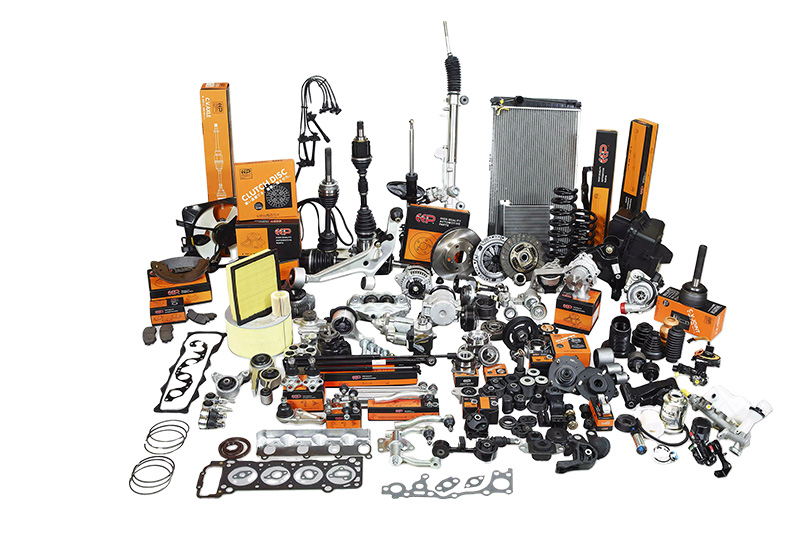
The Bottom End houses the heavy-duty rotating assembly deep inside the block: the crankshaft, pistons, connecting rods, and main bearings. Failures here are almost always catastrophic.
Rod Knock or a "Thrown Rod" occurs when a connecting rod bearing fails, usually due to oil starvation or extreme mileage. The resulting metal-on-metal impact destroys the crankshaft journal. In severe cases, the rod can snap and punch a hole through the side of the engine block.
A Seized Engine happens when lubrication fails completely, causing the pistons to weld themselves to the cylinder walls due to friction heat. At this decision point, repairs are rarely viable. The cost to machine the block and replace the rotating assembly usually exceeds the cost of purchasing a replacement engine.
Not all engine problems require tearing apart the motor. Many issues originate in the ancillary systems—the external parts that support the engine’s operation. These are often the "quick fixes" that allow you to restore performance without a mechanic.
Misfires are frequently caused by the ignition system rather than internal mechanical damage. The ignition coil packs are a leading cause of rough idling and check engine codes. Diagnosing a bad ignition coil is straightforward: if your scanner indicates a misfire on Cylinder 1, swap the coil to Cylinder 2. If the code moves to Cylinder 2, the coil is faulty and can be replaced in minutes with basic tools.
Spark plugs are another wear item often neglected. Over time, the electrode gap widens, stressing the coil and causing weak sparks. Replacing them at manufacturer intervals restores fuel economy and smoothness.
Sensors govern how much fuel the engine gets. A dirty Mass Air Flow (MAF) sensor can cause the computer to miscalculate air intake, leading to stalling or hesitation. A simple cleaning with a specialized spray is a valid quick fix that saves the cost of a new part. Similarly, oxygen (O2) sensors can trigger alarmist dashboard lights but usually do not stop the car from driving. However, ignoring them long-term can damage the catalytic converter.
The cooling system protects the engine from self-destruction. The thermostat is a small, inexpensive valve that regulates temperature. If it sticks closed, the engine overheats rapidly. If it sticks open, the engine never reaches operating temperature, wasting fuel. Hoses and belts are the easiest preventative replacements you can perform. Swapping a cracking radiator hose costs very little but offers the highest return on investment by preventing a roadside breakdown.
Once you have identified the failing auto engine parts, the question becomes financial. Does it make sense to fix the car? Use this logic-based framework to decide.
Apply a strict financial cap: if the total cost of repairs (parts plus labor) exceeds 50% of the vehicle’s current market value, you should reconsider the investment. Spending $3,000 to fix an engine in a car worth $4,000 is rarely wise unless the vehicle has sentimental value or you know the rest of the chassis is in pristine condition.
Where you buy your parts matters. For critical internal components like timing chains, sensors, or bearings, stick to OEM (Original Equipment Manufacturer) or Tier 1 suppliers. These parts demand precise tolerances.
For non-critical items, aftermarket options offer acceptable savings. Air filters, cabin filters, and simple hoses from reputable aftermarket brands generally perform well and reduce the Total Cost of Ownership (TCO).
If you face a Bottom End failure but your cylinder heads are fine, consider purchasing a "short block." This is a pre-assembled lower engine containing the block, crank, and pistons. You (or your mechanic) transfer your existing Top End components onto the new block. This is significantly cheaper than a full "crate engine" or "long block," bridging the gap between a risky used engine and an expensive new one.
Used Engines (Junkyard): Lowest cost, highest risk. Warranties are often limited to 30 days and cover parts only, not the labor to install them again if they fail.
Remanufactured Engines: Higher cost, but they come with factory-level reliability and warranties. This resets the "odometer logic" for the engine's life.
The best way to fix an engine is to prevent it from breaking. Proactive maintenance yields a high Return on Investment (ROI) by extending the life of the powertrain.
You don't have to wait for a noise to know your engine is wearing out. Sending an oil sample to a lab can detect microscopic particles of bearing material like copper or lead. This early warning allows you to address lubrication issues before they turn into a rod knock.
Modern engines often use Direct Injection (GDI) for better efficiency. The trade-off is that fuel no longer washes over the intake valves to clean them. Carbon builds up on the valves over time, suffocating the engine. Owners of GDI vehicles must budget for induction cleaning services every 30,000 to 50,000 miles to prevent valve train issues.
Heat is the enemy of longevity. The cooling system is actually the primary protector of the entire powertrain system. Flushing old coolant prevents electrolysis and corrosion, which can eat through gaskets and water pump impellers from the inside out. Keeping the engine at the correct temperature ensures oil viscosity remains optimal, protecting those critical bottom-end bearings.
Accurate diagnosis is the barrier between a minor repair bill and a total financial loss. Panicking and replacing random parts rarely solves the problem and drains your budget. By using your senses to detect the early signs of failure—whether it's a sweet smell of coolant or the rhythmic click of a valve—you can catch issues before they escalate.
While ancillary components like the ignition coil, sensors, and hoses are viable candidates for DIY quick fixes, internal noises usually demand a professional evaluation. If your diagnostics point to deep, rhythmic knocking from the bottom of the engine, it is time to calculate the vehicle's value against the cost of a replacement engine. Always prioritize data over guesswork to keep your vehicle reliable and your wallet safe.
If your symptoms match the "Bottom End" criteria or you remain unsure of the source, schedule a professional diagnostic immediately. Ignoring the warning signs will only make the inevitable repair more expensive.
A: The "Holy Trinity" of engine failure signs includes a flashing Check Engine Light, loud knocking or tapping noises that rise with RPM, and metal flakes (glitter) visible in the oil. Smoke from the exhaust—blue for oil, white for coolant—is also a definitive indicator of internal mechanical breaches.
A: Generally, no. Rod knock indicates severe bottom-end damage where bearings have failed and likely damaged the crankshaft. Rebuilding a bottom end is labor-intensive and costly. In most cases, replacing the entire engine with a used or remanufactured unit is more cost-effective than attempting to repair the specific bearing.
A: Yes, indirectly. A bad ignition coil causes misfires, meaning unburnt fuel enters the exhaust system. This raw fuel can overheat and melt the catalytic converter, a part that costs significantly more than the coil itself. Prolonged misfires can also wash oil off cylinder walls, accelerating piston wear.
A: The general rule is between 60,000 and 100,000 miles, but you must check your owner's manual. If you have an "interference engine," a snapped belt will cause pistons to hit valves, destroying the engine instantly. Never delay this maintenance item.
A: A short block includes only the bottom section of the engine: the engine block, crankshaft, pistons, and connecting rods. A long block is more complete, including the short block plus the cylinder heads, camshafts, and valves. A long block is a "drop-in" solution, while a short block requires transferring your old top-end parts.