
Views: 0 Author: Site Editor Publish Time: 2026-02-16 Origin: Site


Most vehicles roll off the assembly line as a compromise. While modern engineering is impressive, factory specifications prioritize cost reduction, cabin silence, and broad emissions compliance over raw power. For the enthusiast, this means the vehicle in your driveway is likely operating well below its potential. The engine is an air pump, and manufacturers intentionally restrict its breathing to keep it quiet and fuel-efficient for the average consumer. To unlock the true capabilities of your machine, you must look beyond the standard equipment.
Optimizing a vehicle involves more than just bolting on a shiny accessory; it requires a systematic approach. You cannot simply force more air into the cylinders without ensuring you have enough fuel to burn it and a spark strong enough to ignite it. This guide analyzes the most effective auto engine parts available today, distinguishing between maintenance replacements that restore lost efficiency and performance upgrades designed to add new horsepower. From the intake to the exhaust tip, we will explore how to build a balanced, reliable, and powerful machine.
Airflow is First: Increasing oxygen volume is the most cost-effective first step (Intakes/Manifolds).
The "Support" Rule: Higher horsepower requires upgraded cooling and fuel delivery to prevent engine failure.
Compliance Matters: Performance headers and downpipes offer high ROI but pose emissions compliance risks.
Tuning is Mandatory: Physical parts often require ECU recalibration to realize actual gains.
The first step in any performance build is addressing the "strangled" nature of the stock induction system. Factory engineers design intake systems to dampen the noise of air rushing into the engine. They utilize baffled tubing and resonators that disrupt airflow velocity. By removing these restrictions, you improve throttle response and allow the engine to ingest oxygen more efficiently.
A Cold Air Intake (CAI) is often the gateway modification for enthusiasts. Its primary function is to replace the restrictive factory air box and baffled rubber tubing with smooth mandrel-bent piping and a high-flow filter. The goal is two-fold: reduce airflow resistance and isolate the air filter from the searing heat of the engine bay.
When evaluating a CAI, material choice is critical. Aluminum looks attractive but can absorb engine heat, potentially warming the intake charge. High-quality heavy plastics or composites often resist heat transfer better, keeping the air charge cool and dense. You must also decide between "Closed Box" and "Open Element" designs. Open elements sound aggressive but are susceptible to "heat soak" in stop-and-go traffic, whereas closed boxes feed air from outside the fender well, maintaining lower intake temperatures.
ROI and Expectations: Do not expect a massive transformation from a CAI alone. On a modern naturally aspirated engine, gains typically range from 5 to 15 horsepower. However, the real benefit lies in the sensory experience. The induction noise becomes deeper, and the throttle response feels snappier, making the car more enjoyable to drive.
Once you have streamlined the path to the engine, the next restriction is the gatekeeper itself: the throttle body. Performance throttle bodies feature a larger internal bore, increasing the maximum CFM (Cubic Feet per Minute) of air that can enter the intake manifold. This modification is particularly effective on large displacement engines or forced-induction setups where the stock unit creates a bottleneck at high RPM.
Compatibility is the main challenge here. Modern auto engine parts for passenger cars almost exclusively use Drive-by-Wire (electronic throttle control). You cannot simply swap a mechanical cable throttle onto these systems. An upgraded electronic throttle body requires precise calibration with the ECU to ensure the idle remains stable and the accelerator pedal maps correctly to the butterfly valve opening.
Decision Trigger: This upgrade is rarely the first step. It is best implemented after you have already upgraded the intake piping and exhaust, ensuring the engine can actually utilize the extra airflow capacity.
The intake manifold distributes air to each cylinder. Factory manifolds are generally a compromise designed to provide a broad power band for daily commuting. Performance manifolds optimize the "runner length"—the tubes connecting the central plenum to the cylinder head ports.
The physics are straightforward but critical:
Long Runners: Promote air velocity at low speeds, increasing low-end torque.
Short Runners: Allow for massive airflow volume at high speeds, increasing peak horsepower.
For a high-revving track build, a short-runner sheet metal or cast aluminum manifold is essential. However, for a street car, you must be careful not to sacrifice too much low-end torque, or the vehicle will feel sluggish at stoplights.
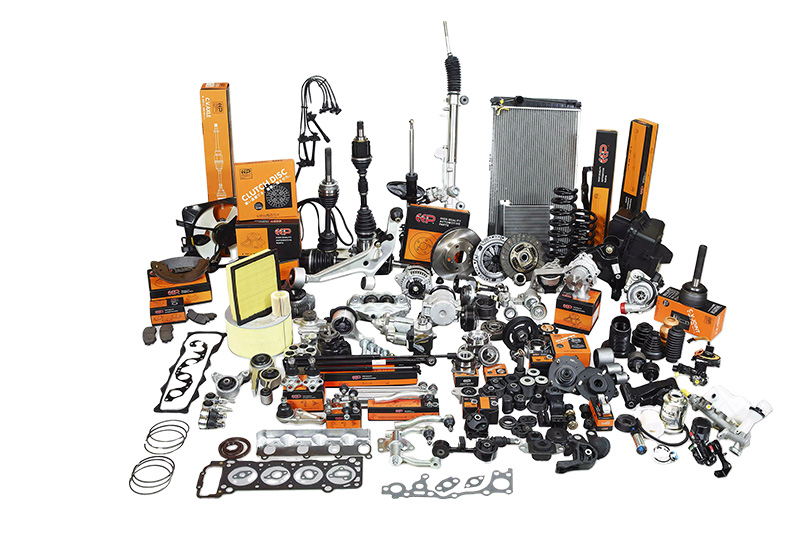
Adding more air to the engine is useless if you cannot burn it efficiently. The combustion triangle requires air, fuel, and spark. As you increase the air volume, you must simultaneously upgrade the ignition and fuel systems to prevent lean conditions or misfires.
In a stock engine, the factory ignition coils provide just enough voltage to jump the spark plug gap under normal atmospheric pressure. However, when you increase cylinder pressure—especially in turbocharged or supercharged applications—the resistance across that gap increases. Weak factory coils may fail to fire, leading to "spark blowout" under load.
Upgrading to high-output ignition parts, such as performance coil-on-plug packs, ensures a hotter, more consistent spark. These components are designed with lower internal resistance and higher voltage output. While a standard commuter car may not see a horsepower gain from coils alone, a modified engine relies on them to maintain smooth power delivery at redline.
Maintenance vs. Upgrade: If your engine is stock, stick to high-quality OEM replacements. If you have increased compression or added boost, aftermarket high-output coils become a safety necessity to ensure complete combustion.
Spark plugs are the final variable in the ignition equation. For performance applications, the material (Iridium or Ruthenium) matters for durability, but the "Heat Range" matters for engine safety.
A "colder" spark plug has a shorter insulator nose, which transfers heat away from the firing tip faster. In a modified engine, combustion temperatures soar. If the plug retains too much heat, it can become a glow plug, igniting the fuel before the spark fires. This is called pre-ignition, and it can destroy an engine in seconds. When adding 75–100 horsepower over stock, it is standard practice to move one step colder in heat range. Additionally, you must gap the plugs correctly; a smaller gap is often required for high-boost setups to prevent the spark from being extinguished by cylinder pressure.
The fuel injector is a solenoid valve that sprays fuel into the intake tract or directly into the cylinder. Factory injectors are sized to handle stock power levels with a small safety margin. Once you improve airflow with intakes and headers, the stock injectors may reach 100% "duty cycle." This means they are staying open constantly and still cannot supply enough fuel.
When injectors max out, the engine runs lean (too much air, not enough fuel), causing temperatures to spike and pistons to melt. Upgrading to high-flow injectors is the solution. Sizing logic depends on your target horsepower and fuel type. For example, if you plan to run E85 ethanol, you need roughly 30% more flow volume than standard gasoline because ethanol contains less energy per gallon.
An engine wastes significant energy simply pushing exhaust gases out of the cylinders. This parasitic loss reduces the power available to turn the wheels. Performance exhaust components focus on scavenging—using fluid dynamics to pull exhaust gases out more efficiently.
The exhaust manifold is the first component the exhaust gas encounters. Stock manifolds are often heavy cast iron with unequal runners that cause exhaust pulses to collide, creating backpressure. Performance headers use "equal length" tubular designs. This ensures that the exhaust pulse from one cylinder creates a vacuum effect that helps pull the exhaust out of the next cylinder firing in the sequence. This scavenging effect drastically improves engine efficiency.
For turbocharged vehicles, the restriction is usually immediately after the turbo. This is why downpipes are critical auto engine parts for Japanese cars like the Subaru WRX, Toyota Supra, or Honda Civic Type R. Replacing the restrictive factory downpipe allows the turbocharger to spool up faster, reducing lag and increasing boost response. When choosing these parts, T304 stainless steel is the industry standard for balancing cost and corrosion resistance, while titanium offers ultimate weight savings for racing budgets.
The catalytic converter is often the single biggest restriction in the exhaust stream. Factory units use a dense ceramic brick to trap emissions, which slows down exhaust flow. Many enthusiasts are tempted to remove them entirely ("straight piping"), but this is illegal for street use in most jurisdictions and creates noxious fumes.
The modern solution is the High-Flow Catalytic Converter. These units use a metallic substrate with a lower cell density (measured in Cells Per Inch, or CPSI). A standard cat might be 600-800 CPSI, while a high-flow unit is 200-300 CPSI. This design flows nearly as well as a straight pipe but maintains enough catalytic action to reduce smell and often keep the Check Engine Light off, provided the ECU is tuned effectively.
Performance is not just about the sprint; it is about the marathon. Generating more power creates significantly more heat and stress. If you do not support the powertrain system with reliability upgrades, your investment may end up on the back of a tow truck.
A modified engine rejects more BTUs of heat than a stock one. The factory radiator is often thin and features plastic end tanks that can crack with age and heat cycling. An all-aluminum performance radiator features a thicker core and greater fluid capacity, stabilizing engine temperatures during hard driving.
For forced induction vehicles, the intercooler is vital. As a turbo compresses air, it heats it up. Hot air is less dense and more prone to detonation. An upgraded intercooler acts as a heat sink, lowering the Intake Air Temperature (IAT). Lower IATs allow the ECU to advance ignition timing safely, which is where the real power is made. If your intercooler is too small, "heat soak" will set in after one or two hard acceleration runs, and the ECU will pull power to protect the engine.
The Engine Control Unit (ECU) is the brain of the operation. It reads data from sensors and decides how much fuel to inject and when to fire the spark. Physical upgrades like intakes and exhausts alter the airflow characteristics that the factory ECU expects. Without a new "map" or tune, the ECU might not utilize the new parts, or worse, it might run the engine dangerously lean.
There are two main approaches:
Piggyback Modules: These plug in between the engine sensors and the ECU, intercepting signals to trick the computer into adding more boost or fuel. They are easy to install and remove.
Flash Tuning / Standalone: This rewrites the software on the ECU itself. It offers total control over every parameter, including throttle mapping, launch control, and rev limiters. While more invasive, this method yields the smoothest and safest results.
Not all upgrades are suitable for every driver. A race car part often makes a street car miserable to drive due to vibration or noise. Use this framework to decide where to spend your budget.
If your vehicle is a daily driver, beware of Polyurethane engine mounts and aggressive exhaust systems. They introduce Noise, Vibration, and Harshness (NVH) that can become unbearable on a long commute. Conversely, a "track weapon" needs these rigid parts to ensure precise handling and power transfer, regardless of comfort.
It is essential to look at the "Dollar-per-HP" ratio. Some parts offer massive returns, while others are largely cosmetic.
| Upgrade Category | Estimated Cost | Performance Gain | Verdict |
|---|---|---|---|
| ECU Tune | $400 - $1,000 | 20 - 100+ HP | Best Value. Essential to unlock hardware potential. |
| Performance Tires | $600 - $1,200 | N/A (Grip) | Critical. Power is useless without traction. |
| Downpipe (Turbo Cars) | $300 - $800 | 15 - 30 HP | High ROI. Massive reduction in turbo lag. |
| Cold Air Intake | $200 - $500 | 5 - 15 HP | Moderate. Buy for sound and throttle response. |
| Cat-Back Exhaust | $800 - $2,000 | 5 - 10 HP | Low ROI. Mostly for sound, not significant power. |
Before purchasing, assess your DIY capabilities. An intake is a simple driveway job, but a header installation often requires lifting the engine or specialized tools. Furthermore, always check regional emissions regulations. In the US, for example, parts lacking a CARB EO number may cause your vehicle to fail inspection.
Achieving peak performance is rarely about finding one "magic bullet" part. It is about orchestrating a symphony of components where air, fuel, spark, and data work in harmony. The most successful builds follow a logical progression: start by helping the engine breathe with intake and exhaust modifications, then support that airflow with reliable ignition and cooling upgrades.
We recommend starting with the foundational "Breathing" mods and ensuring your maintenance baseline (fluids, filters, and plugs) is perfect. Do not rush into internal engine work until you have maximized the efficiency of the bolt-on components. Finally, document your progress. Testing your vehicle’s baseline performance before installing new auto engine parts gives you the data to verify your Return on Investment and tune for the future.
A: Generally, an ECU tune offers the highest horsepower-per-dollar ratio, especially for turbocharged vehicles. For mechanical parts, a high-flow downpipe (on turbo cars) or long-tube headers (on naturally aspirated V8s) provide the most significant gains. Tires, while not adding horsepower, provide the best performance improvement by allowing you to actually use the power you have.
A: Not automatically. In many regions, such as under the Magnuson-Moss Warranty Act in the US, a manufacturer cannot void your entire warranty simply because you installed an aftermarket part. They must prove that your specific modification caused the failure in question. However, if you tune the ECU and blow the engine, that specific claim will almost certainly be denied.
A: Yes, but you should choose parts designed for street efficiency. Auto engine parts for passenger cars are designed to balance fuel economy and mild power increases. Avoid race-spec parts like aggressive camshafts or open exhausts, as they can sacrifice low-end torque and fuel efficiency, making the car difficult to drive in traffic.
A: Performance parts often sacrifice longevity for output. For example, while a factory iridium spark plug might last 100,000 miles, a colder performance plug used in a tuned engine might need replacement every 20,000 to 30,000 miles. High-output coils are also subjected to greater thermal stress and may require more frequent inspection than stock units.
A: Japanese engines (JDM) often prioritize high-RPM efficiency and smaller displacements with forced induction, whereas American domestic markets historically favored larger displacement V8s. Consequently, auto engine parts for Japanese cars often focus heavily on turbo management (blow-off valves, intercoolers) and metric sizing standards, utilizing suppliers like Denso or NGK rather than Bosch or Delphi.