
Views: 100 Author: Site Editor Publish Time: 2026-01-13 Origin: Site


You depend on your car’s control arm every time you drive. This part links the wheel hub to the frame, letting the suspension system keep your ride smooth. A strong control arm keeps your car steady and helps you turn safely. If you ignore it, your car may lose proper alignment, which can cause uneven tire wear and risky driving. Good control arms boost handling and passenger comfort, so choose a reliable one for the best results.
A control arm links the car’s frame to the wheel hub. This helps the wheels move smoothly and makes driving easier.
Check your control arms often for damage. Listen for clunking sounds or look for uneven tire wear. This helps keep you safe when driving.
Change control arms every 90,000 to 100,000 miles. Replace them sooner if you see any damage. This stops big repairs and keeps your car safe.
Pick control arms that are strong and last a long time. Good control arms help your car work better and last longer.
Ask a mechanic for help if you do not know how to change control arms. This makes sure your car is safe and the wheels are lined up right.
A control arm is a key part of your car’s suspension system. You can think of it as a strong, hinged link that connects the frame of your car to the wheel hub. This connection lets each wheel move up and down when you drive over bumps or rough roads. The control arm helps your car’s wheels stay in the right position, so you get a smooth ride and better control.
When you drive, the control arm allows the wheel to travel vertically. This movement keeps your tires in contact with the road, even when the surface is uneven. The control arm, sometimes called an A-arm, works with other parts of the suspension to keep your car stable and safe. If you look under your car, you will find the suspension control arm attached between the chassis and the wheel hub. This part is essential for keeping your car’s wheels aligned and making sure your tires wear evenly.
If your control arm bends or breaks, your car may not drive straight. You could notice your steering feels off or your tires wear out faster than normal. In the worst case, a broken control arm can cause you to lose control of your car. Always pay attention to any strange noises or changes in how your car handles.
The suspension control arm does more than just connect parts. It plays a big role in how your car feels and handles on the road. Here are some reasons why the control arm is so important:
The control arm links the body of your car to the wheels. This connection lets each wheel move on its own while keeping the car frame level.
It helps give you a smooth and even ride. If the control arm wears out, you might hear noises or feel the car pull to one side.
Many modern cars use lightweight, corrosion-resistant control arms. These materials help improve fuel economy and lower repair costs.
A damaged suspension control arm can cause several problems:
Your car may not stay straight because the wheels lose proper alignment.
You might feel less control, especially when turning or driving fast.
The tires may not grip the road as well, which can make your car less stable.
The control arm is a small part, but it has a big impact on your safety and comfort. By keeping your suspension in good shape, you help your car last longer and drive better.
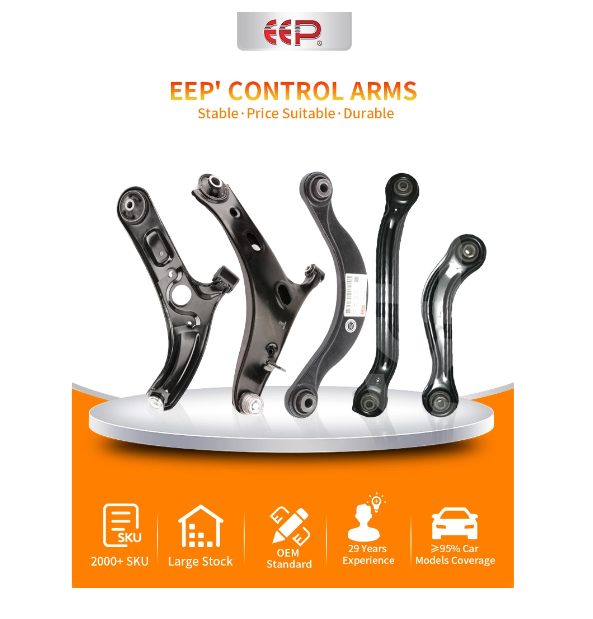
A suspension control arm has a few main parts. The main body connects the car’s frame to the wheel. Bushings and ball joints are found at each end. These let the control arm move when you drive over bumps. Bushings are usually made of rubber or polyurethane. Ball joints are made of metal for strength and movement.
The material of the control arm is important for safety and how it works. Car makers use different metals and composites to balance strength, weight, and cost. Here is a table that shows common materials used in control arms:
Material | Tensile Strength (psi) | Weight (relative) | Cost | Best Application |
|---|---|---|---|---|
6061-T6 Aluminum | 45,000 | Light (1.0) | Moderate | Street/Mild Performance |
7075-T6 Aluminum | 83,000 | Light (1.0) | High | Performance/Track |
4130 Chromoly | 97,000 | Heavy (2.9) | Moderate | Heavy-Duty/Off-Road |
Forged Steel | 110,000+ | Very Heavy (3.0) | Moderate | Heavy Trucks/Extreme Use |
Carbon Fiber | 500,000+ | Ultra-Light (0.5) | Very High | Elite Performance/Racing |

The material you pick changes how the control arm handles bumps and shakes. Rubber bushings make the ride quiet but wear out faster. Polyurethane bushings last longer and help with handling. Some fast cars use Delrin or spherical bearings for better control.
EEP uses strong materials and checks quality carefully. This makes sure your control arm lasts and fits your car well. You can trust EEP to make tough and dependable suspension parts.
Most cars have the suspension control arm in the front. It links the wheel hub to the car’s frame. Some cars also have control arms in the back. The upper control arm connects to the top of the wheel. The lower control arm connects to the bottom. Both arms help keep the wheel steady and straight.
The control arm sits on the axle and connects to the steering knuckle.
Heavy-duty cars may have control arms on the rear axle.
Some cars use two arms in a wishbone shape for better handling.
Where the suspension control arm sits changes how your car turns and handles bumps. The length and angle of the arm affect how well it absorbs shocks. Good placement keeps your ride smooth and safe. The control arm is a key part that helps your car stay steady and comfy.
Tip: Check your suspension control arm often to find problems early and keep your car working well.
You can find the control arm at the heart of your car’s suspension system. It links the wheel assembly to the frame, making sure every part works together. Here is how the main parts connect:
The upper control arm attaches the top of the wheel to the car’s frame.
The lower control arm connects the bottom of the wheel to the frame.
The suspension ball joint joins the control arms to the wheel assembly, letting the wheel turn and move up and down.
The suspension rod links the control arms to the stabilizer bar, helping your car stay level during turns.
This setup allows for controlled movement and keeps your car steady on the road.
Component | Function |
|---|---|
Control Arm | Connects the wheel hub to the vehicle's frame, allowing controlled movement and maintaining alignment. |
Inner Bushings | Act as flexible hinges, permitting vertical wheel travel while restricting lateral and fore-aft shifts. |
Ball Joint | Facilitates rotation during steering, ensuring optimal contact with the pavement for traction. |
A well-designed suspension control arm gives your car better handling abilities. It connects the suspension to the frame, so your wheels move up and down but stay lined up with the car body. This keeps your ride smooth and helps your tires last longer. You get better steering and more control when you turn. The control arm absorbs shocks from rough roads, providing stability and comfort. Your wheels stay in contact with the road, which is important for safe braking and turning.
Tip: If you want your car to handle well and stay safe, make sure your suspension control arm works as it should.
You will see both upper and lower control arms in many cars. The upper control arm connects the top of the wheel to the frame. Heavy-duty vehicles like trucks and SUVs often use upper control arms for extra support. The lower control arm is more common and found in most cars, no matter their size. Both types help keep the wheel steady and allow for smooth, controlled movement. They work together to give you a comfortable ride and good handling.
You may face several types of damage when it comes to your car’s control arm. These problems often come from how and where you drive. Here are the most common causes:
Rough road conditions can bend or deform the control arm.
Carrying too much weight in your car puts extra stress on the suspension control arm.
Skipping regular maintenance lets small issues turn into bigger damage.
Corrosion from rain, snow, or road salt can weaken the metal parts.
Aggressive driving, like hard turns or sudden stops, increases the risk of damage.
You should know that each of these problems can affect the controlled movement of your wheel. If you ignore these signs, you may face more expensive repairs later.
You can spot control arm damage by watching for certain warning signs. These symptoms often show up while you drive or when you check your tires and suspension. Look for these clues:
Unstable steering, where your car pulls or wanders to one side.
Uneven tire wear, especially on the edges of your tires.
Excessive vibration in the steering wheel, especially when you drive over bumps.
Clunking or knocking noises from the suspension when you turn or hit a bump.
Poor handling and slow steering response.
Clicking or popping sounds when you turn the wheel.
Steering that feels stiff or sticks.
Tip: If you notice any of these signs, you should inspect your control arm as soon as possible. Early action can prevent further damage and keep your car safe.
Irregular tire wear often means there is a problem with alignment. Worn control arms can let the wheel wobble, which leads to these uneven patterns. You may also feel shaking or vibrations, which means the suspension is not working as it should.
Driving with a damaged control arm puts your safety at risk. Here is a table that shows the main dangers:
Safety Risk | Description |
|---|---|
Steering Issues | Your car may pull or veer to one side, making it hard to drive straight. |
Strange Sounds | You may hear clunking or banging noises when you drive over bumps. |
Irregular Tire Wear | Bad control arms can cause your tires to wear unevenly and lose grip. |
You need to check your control arm often. Regular checks and quick replacements help your car’s suspension work right. If you replace worn parts on time, you lower the chance of accidents and keep your ride smooth.
Note: Timely inspection and replacement of your control arm can save you money and protect you from dangerous situations on the road.
Check your suspension control arm often to keep your car safe. Most experts say you should look at it every 70,000 to 100,000 miles. You should also check if you notice any problems with your suspension. Look for cracks or worn spots in the bushings and ball joints. Try moving the wheel back and forth while someone watches for loose parts. This helps you find damage early before it gets worse. Doing quick checks during oil changes or tire rotations helps you catch problems sooner.
Tip: Finding damage early can stop bigger problems and save money.
Plan to replace your control arm after about 90,000 to 100,000 miles. If you see cracks, bent metal, or worn bushings, change the part right away. Waiting too long can hurt other parts like struts, brakes, and tires. Fixing it quickly helps keep your car lined up and saves you from expensive repairs. Changing the control arm before it breaks keeps your car safe and smooth.
Change the control arm if you have steering trouble or uneven tire wear.
Do not wait if you hear clunking sounds or feel shaking.
Replacing it on time stops more damage to your car.
You can put in a new control arm yourself if you have the right tools and know how. Many control arms are easy to install if they fit your car’s make and model. Good parts fit well and do not need extra changes. If you are not sure, ask a mechanic for help. They will make sure everything is put together right and check the alignment for safety.
Aspect | DIY Installation | Professional Installation |
|---|---|---|
Feasibility | Possible for people with tools and experience | Usually best for most drivers |
Challenges | Stuck bolts, risk of mistakes, alignment needed | Makes sure everything is put together right |
Safety | Mistakes can make driving unsafe | Experts lower the risk and keep you safe |
Buying a good control arm helps your car work well for a long time. You keep your car safe, make it easier to drive, and stay comfortable.
You need the control arm to help your car stay safe and steady. It also makes your ride more comfortable. Checking it often lets you find problems before they get worse. If you do not fix damage, you could have trouble steering or stopping. Keep these tips in mind:
Look at your control arms every 30,000 to 50,000 miles.
Change them if you see dents, cracks, or bushings that look worn.
Getting help from an expert can make your car handle better and feel smoother.
Fix any damage fast and talk to a mechanic if you are not sure about changing the part.
A control arm connects your car’s frame to the wheel hub. It lets the wheel move up and down. This helps your car stay stable and smooth on the road.
You might hear clunking noises, feel vibrations, or notice uneven tire wear. Your steering may feel loose or your car may pull to one side. These signs mean you should check your control arm.
You should not drive with a damaged control arm. It can make your car unsafe. You could lose control or damage other parts. Always fix it as soon as possible.
Check your control arms every 30,000 to 50,000 miles.
Inspect them if you notice any strange sounds or handling issues.
Regular checks help you catch problems early.