
Views: 50 Author: Site Editor Publish Time: 2025-12-30 Origin: Site


Think of your vehicle’s suspension system using a "human joint" analogy. If the wheels are the feet and legs, the control arms act as the hips and shoulders. They are the critical structural links that connect the wheel hub to the vehicle’s main chassis. Without them, your wheels would have no stable connection to the car, making controlled movement impossible. They are not merely static metal bars; they are dynamic components that articulate, pivot, and absorb road force every time you drive.
While many drivers associate suspension issues purely with ride comfort, the primary role of a control arm is safety. These components are responsible for maintaining steering geometry and preventing wheel detachment under load. When they wear out, the consequences range from annoying vibrations to catastrophic loss of steering control. You are likely reading this because your vehicle has started exhibiting symptoms—perhaps a clunking noise over bumps or wandering steering—and you are now facing a repair decision. Should you replace just the worn bushing, the ball joint, or the entire assembly? Understanding the function and failure modes of these parts is essential to making a cost-effective and safe choice.
Function: Control arms dictate wheel motion, preventing forward/backward movement while allowing vertical travel.
The "Assembly" Rule: For most modern vehicles, replacing the entire control arm assembly (arm + ball joint + bushings) is more cost-effective than paying labor to press in individual bushings.
Safety Criticality: Bushing failure causes noise and tire wear; ball joint failure can cause immediate loss of control.
Implementation: Always replace in pairs (left and right) and factor in the cost of a mandatory wheel alignment immediately after installation.
To understand why these components fail, we must first understand what they actually do. A control arm does far more than simply "hold the wheel." It is a sophisticated guide that manages the complex interaction between the chaotic road surface and the driver’s steering input. In engineering terms, these are often referred to as suspension arms because they suspend the weight of the vehicle while constraining the motion of the wheels.
The primary function is geometry maintenance. As you drive, your tires need to remain vertical (camber) and perfectly aligned, even when you slam on the brakes or accelerate hard. Without the rigid guidance of the control arm, the torque from braking would pull the wheel backward into the wheel well. The arm acts as a brace, resisting these horizontal forces while strictly allowing vertical travel so the suspension can absorb bumps.
The control arm operates as a hinge system with two distinct connection points, each serving a specific purpose:
Connection Point A (Chassis): This is where the arm attaches to the frame of the car using rubber or polyurethane bushings. These bushings are designed to dampen Noise, Vibration, and Harshness (NVH) before it reaches the cabin. They allow the arm to pivot up and down without metal-on-metal friction.
Connection Point B (Knuckle): This is the outer end that connects to the wheel hub via a ball joint. The ball joint is a multi-directional pivot that allows the wheel to turn left and right for steering while simultaneously moving up and down with the suspension.
Not all vehicles use the same configuration, and identifying your suspension type is the first step in ordering parts. Most economy and standard passenger cars utilize a MacPherson Strut design. In this setup, there is typically only a single lower control arm. The shock absorber (strut) itself acts as the upper structural point. If you are shopping for parts for a standard sedan, you are likely looking for a "lower control arm."
In contrast, performance vehicles, heavy trucks, and luxury cars often employ a Double Wishbone suspension. This design uses both an upper and a lower control arm. The two arms working in unison allow for better stability and tire contact during aggressive cornering. If you own a truck or a sports car, you may need to determine if the failure is in the upper arm, the lower arm, or both.
Diagnosing control arm issues requires distinguishing between the two main failure points: the bushings and the ball joints. While they are part of the same assembly, they fail in different ways and present different risks.
Bushings are the rubber insulators mounted at the frame side of the arm. Over time, rubber naturally dries out, cracks, and loses elasticity. When a bushing fails, the metal sleeve inside it begins to bang against the bracket.
Symptoms include:
Clunking or knocking noises when driving over speed bumps or potholes.
"Squeaking" sounds similar to an old mattress, especially in cold weather.
A vague or loose feeling in the steering wheel during braking.
This is a particularly common issue for Japanese cars like Toyota and Honda. These vehicles are famous for their longevity, often running for hundreds of thousands of miles. However, while the stamped metal arm itself remains structurally sound, the rubber components often dry-rot and tear long before the engine quits. You might have a perfectly running engine sitting on a suspension that clunks at every turn.
While bushing failure is annoying, ball joint failure is dangerous. The ball joint bears the immense weight of the vehicle and the forces of steering. Unlike a bushing, which is captured within a bracket, a ball joint is a ball-and-socket mechanism. If the socket wears out excessively, the ball can physically pop out.
Symptoms include:
A distinct clicking or popping sound when turning the steering wheel.
Wandering steering, where the car refuses to track straight and requires constant correction.
Uneven tire wear, often on the inner or outer edge of the tire.
Catastrophic Potential: If a ball joint separates while driving, the control arm disconnects from the wheel knuckle. This usually causes the wheel to fold under the car, snapping the axle and causing an immediate loss of control. Unlike bushing issues, which you can often ignore for a few weeks, a loose ball joint demands immediate attention.
Physical bending of the metal arm is rare but possible. This usually happens after a significant impact, such as hitting a deep pothole at highway speeds or sliding into a curb in winter. The diagnostic clue here is often an alignment issue. If a technician cannot get your car’s alignment back into factory specifications despite having good ball joints and bushings, the control arm itself is likely slightly bent.
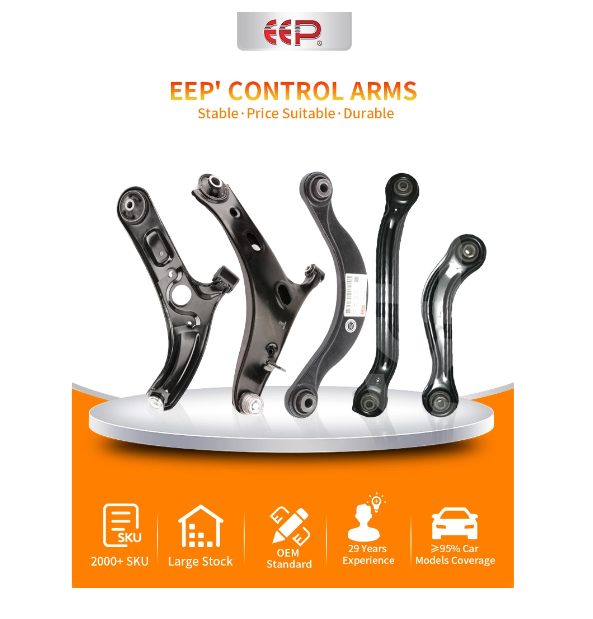
Once you have diagnosed a bad control arm, you face a financial decision. Should you replace just the failed component (the bushing or ball joint) or the entire arm? Years ago, mechanics would routinely press out old bushings and press in new ones. Today, the economics of auto repair have shifted.
To understand the Total Cost of Ownership (TCO) for this repair, we must look at the balance between parts cost and labor time.
| Factor | Option A: Bushings Only | Option B: Loaded Assembly |
|---|---|---|
| Part Cost | Low ($). Rubber bushings are cheap. | Moderate to High ($$). You buy metal, joints, and rubber. |
| Labor Time | High ($$$). Requires removing the arm, using a hydraulic press to remove old rubber, and pressing in new parts. | Low ($). "Plug and Play." Unbolt the old arm, bolt in the new one. |
| Tooling | Requires a hydraulic shop press and specialized sleeves. | Standard wrenches and sockets. |
| Long-Term Value | Poor. You have new rubber in an old metal arm with an old ball joint. | Excellent. You get a new arm, new ball joint, and new bushings simultaneously. |
Verdict: For most standard vehicles, replacing the full "loaded" assembly is the correct financial decision. While the part costs more upfront, the labor savings are significant. Furthermore, a loaded assembly resets the lifespan of the entire suspension corner. If you just replace bushings, your old ball joint might fail 10,000 miles later, forcing you to pay for the same labor all over again.
If you live in an area that uses road salt, replacing individual bushings is nearly impossible. Corrosion often causes the mounting bolts to seize inside the bushing’s metal sleeve. To remove the bushing, a mechanic often has to cut or burn it out, which risks damaging the metal arm. In these environments, buying a fresh assembly is practically mandatory.
For the home mechanic, a loaded assembly transforms a nightmare job into a manageable afternoon project. Replacing bushings requires a 20-ton hydraulic press and dangerous amounts of force. Replacing a loaded control arm is a "bolt-on" job that requires standard hand tools, making it accessible to competent DIYers.
When shopping for control arms, you will encounter three main tiers of quality. Choosing the right one depends on your budget and how you use your vehicle.
OEM parts are the exact replacement of what came on your car from the factory. The rubber compounds are specifically tuned to the VIN for the perfect balance of handling and comfort. The downside is the price; OEM control arms are typically the most expensive option. They are the best choice for owners who want to restore the car to "showroom" condition.
This is the most popular category. Brands like MOOG often offer "Problem Solver" lines. These parts sometimes improve upon the original design—for example, by replacing a sealed OEM ball joint with a greasable one that can be serviced. However, caution is required with "white box" or extremely cheap unbranded parts. Inconsistent quality control on the rubber bushings can lead to premature failure, where the rubber tears in less than a year.
Truck and SUV owners who install lift kits face a unique problem. Lifting a vehicle changes the resting angle of the stock control arm. This steep angle can cause the ball joint to "bind" (reach its limit of travel) or the arm to hit the coil spring. The solution is aftermarket performance arms. These are often tubular rather than stamped steel and feature corrected geometry (high-angle joints or Uniballs). They restore the alignment specs and travel range that the lift kit disrupted.
Buying the right part is only half the battle. Proper installation is critical to ensuring the longevity of the new components.
Mechanics almost universally recommend replacing control arms in pairs (left and right). The logic is simple: both arms have traveled the same roads, hit the same bumps, and aged for the same amount of time. If the driver-side ball joint has failed, the passenger side is likely not far behind. Doing them both at once saves you from making two trips to the shop and, crucially, paying for two wheel alignments.
You must factor the cost of a wheel alignment into your repair budget. Control arms determine the position of the wheel hub. Even a manufacturing tolerance of one millimeter difference between the old arm and the new arm can throw your "toe" and "camber" settings off significantly. If you skip the alignment, you can destroy a perfectly good set of tires in under 500 miles due to rapid, uneven wear.
If you are installing this yourself or supervising a repair, watch out for the "pre-load" error. This is the most common mistake inexperienced mechanics make.
The Rule: The bolts that go through the rubber bushings must be torqued to spec only while the vehicle is at ride height. This means the car should be on the ground or on drive-on ramps.
The Consequence: If you tighten the bushing bolts while the car is hanging on a lift (wheels dangling), the rubber bushing is locked in that "drooping" position. When you lower the car to the ground, the arm swings up, twisting the rubber before the car even moves. This constant pre-twist will cause the new bushing to tear almost immediately.
Control arms are the unsung heroes of your vehicle's safety system. They act as the essential bridge between the road and your chassis, managing immense forces to keep your drive safe and comfortable. While symptoms like clunking noises or loose steering might seem like minor annoyances, they are warning signs of compromising structural integrity.
When facing a repair, look beyond the cheapest immediate fix. While replacing a single bushing might appear cheaper on paper, the labor costs and the risk of recurring failures often make it a false economy. For the majority of drivers, replacing the full loaded assembly—and doing so in pairs—offers the best Return on Investment (ROI) and safety assurance. Always prioritize high-quality parts, and never skip the mandatory wheel alignment. By treating this repair with the seriousness it deserves, you ensure that your vehicle remains safe, responsive, and reliable for the miles ahead.
A: It depends on the specific failure. If the issue is just worn bushings causing noise, you can drive briefly, though tire wear will accelerate. However, if the ball joint is loose or damaged, you should not drive the vehicle. A broken ball joint can cause the wheel to detach from the suspension while moving, leading to a complete loss of control and a potentially severe accident.
A: Yes, the terms are often used interchangeably. The term "A-arm" refers to the shape of the component, which roughly resembles the letter "A" (or a wishbone). This shape provides two connection points to the frame and one to the wheel, creating a stable triangular structure. Engineers often use "A-arm" or "wishbone," while parts catalogs usually list them as "control arms."
A: Costs vary widely by vehicle. For a standard sedan, a single aftermarket control arm assembly typically costs between $50 and $150. Labor usually takes 1 to 2 hours per side, costing $100 to $300 depending on shop rates. Therefore, a total replacement for one side often ranges from $150 to $450. Performance vehicles or trucks with complex suspensions will cost significantly more.
A: If the metal arm snaps or the ball joint separates, the connection between the wheel and the vehicle frame is severed. The wheel will likely collapse inward or outward, forcing the tire to drag against the wheel well or suspension parts. You will immediately lose steering control over that wheel, and the vehicle will likely skid to a halt. This is a violent mechanical failure that can easily cause a crash.