
Views: 0 Author: Site Editor Publish Time: 2026-09-15 Origin: Site


If your car experiences rough idling, poor fuel economy, or sudden engine misfires, you likely need new components. Drivers often ignore these early warning signs. However, neglecting them can quickly lead to major mechanical breakdowns. The overall health of the engine ignition system directly dictates your vehicle's performance and reliability. Replacing failing components promptly keeps your engine running smoothly. More importantly, it prevents severe and expensive catalytic converter damage down the road. This guide provides a transparent, technical framework for diagnosing these frustrating issues. You will learn how to effectively evaluate and compare OEM versus aftermarket ignition parts. We also guide you through executing a reliable replacement strategy. By following these proven steps, you can confidently restore your vehicle's original power, maximize fuel efficiency, and ensure long-term mechanical stability.
Synergistic Replacement: Replacing spark plugs and ignition coils simultaneously prevents older components from overworking and destroying new ones.
Material Matters: The choice between copper, platinum, and iridium spark plugs directly impacts maintenance intervals and voltage demands on the ignition coil.
Diagnostic Precision: Utilizing OBD-II scanner codes (e.g., P030X series) is critical for isolating misfires before purchasing replacement engine parts.
Fitment Verification: Accurate Year/Make/Model/Engine matching is non-negotiable for ignition components due to strict voltage and spatial tolerances.
Modern engines run on highly precise timing and electrical sequences. The battery provides a standard 12-volt current to the vehicle. However, spark plugs need significantly more energy to operate. They require thousands of volts to ignite compressed fuel properly. The ignition coil perfectly solves this power deficit problem. It acts as a compact, heavy-duty electrical transformer.
Inside the casing, a primary winding draws the low voltage. This current creates a strong internal magnetic field. The secondary winding contains thousands of thin wire loops. When the magnetic field collapses, it multiplies the electrical current massively. The final output can reach up to 45,000 volts. This massive electrical surge travels rapidly down to the spark plug. It bridges the microscopic gap at the tip. A bright spark forms, igniting the air-fuel mixture instantly. The resulting combustion pushes the engine piston downward.
These components operate as a deeply paired ecosystem. They rely completely on each other for survival. Spark plug electrodes naturally wear away over thousands of miles. The gap between them widens very slowly. A wider gap demands much higher voltage to create a viable spark. The coil must work harder to supply this extra electrical energy. Extra work generates excess internal heat. Extreme heat breaks down the internal epoxy insulation. Eventually, the unit suffers premature thermal breakdown. Failing to replace a worn spark plug will easily kill a perfectly good coil.
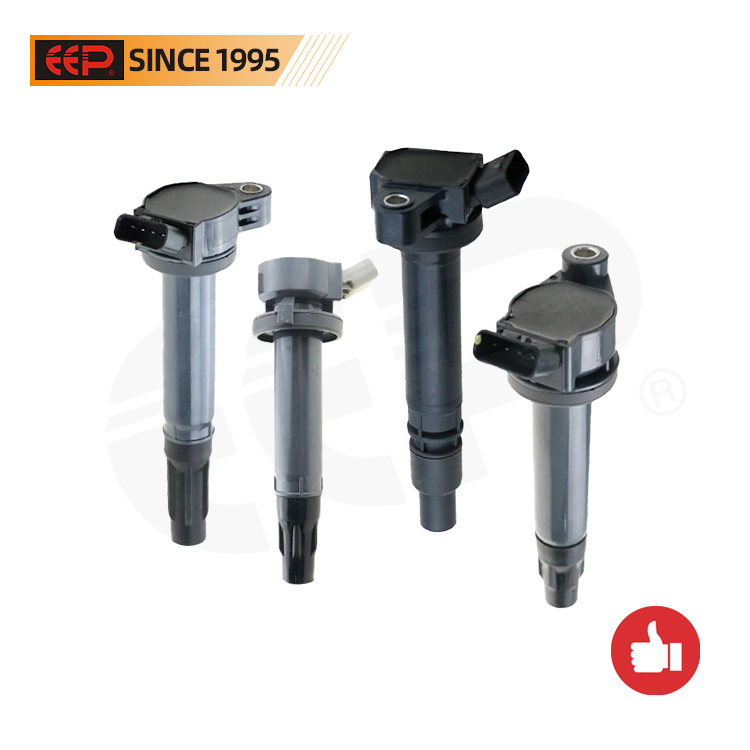
You must accurately identify the exact symptoms first. Proper diagnosis justifies your financial replacement investment. Faulty components disrupt the delicate combustion cycle severely. This disruption causes highly noticeable driving issues. You will experience frustrating engine misfires under heavy loads. The vehicle might hesitate during hard highway acceleration. You may even encounter dangerous stalling at busy intersections.
Pay close attention to these primary warning signs. They indicate immediate component degradation:
Engine misfires, hesitation during acceleration, or stalling at idle speeds.
Illuminated Check Engine Light (CEL) showing specific misfire codes (P0300 - P0308).
Noticeable drops in fuel efficiency and increased exhaust emissions.
Never buy replacement parts blindly. We highly recommend establishing a strict evaluation baseline first. You can perform a simple mechanical swap test. Move a suspected bad coil to a completely different engine cylinder. Clear the computer memory codes afterward. Drive the vehicle normally until the warning light returns. Check the OBD-II scanner again. If the misfire code follows the relocated coil to the new cylinder, the coil is dead. If the code stays on the original cylinder, check the spark plug or fuel injector instead. This logical strategy prevents unnecessary purchases. You only buy the engine parts you truly need.
Mechanics face a common dilemma almost daily in the shop. Should you replace a single failed part to save money? Or should you perform a comprehensive full system tune-up? The full tune-up strategy always yields better long-term results. Professional mechanics strongly advocate for simultaneous component replacement. Fleet managers follow the exact same strict operational rules. They usually replace all spark plugs and coils around the 100,000-mile mark.
We look at cost-to-outcome realities to understand this logic. Replacing only one failed part leaves older components behind. These older units operate at severely reduced efficiency. They drag down the overall performance of the entire engine block.
Older plugs develop exceptionally high electrical resistance. Leaving them in the block creates a massive financial risk. High resistance causes dangerous voltage feedback immediately. This feedback travels directly backward up the rubber boot. It hits the brand-new coil and overloads the delicate internal windings. The new unit overheats and burns out incredibly fast. You just wasted hard-earned money on a new part. Replacing everything together guarantees a proper operational lifespan. It resets the maintenance clock entirely and provides peace of mind.
Buyers face hundreds of purchasing options in today's market. We break these down into two main solution categories. You must carefully weigh the unique benefits of each option.
OEM components come directly from the vehicle manufacturer. They represent the safest, most reliable choice available.
Pros: Exact-fit physical tolerances are strictly guaranteed. Stringent quality control prevents defective units from reaching shelves. Using OEM components easily maintains your existing factory warranty.
Cons: The upfront purchase price is significantly higher. Dealerships often charge massive premium markups for the branding alone.
Independent companies design and manufacture aftermarket components. They offer vast variety and distinct pricing tiers.
Pros: They are highly cost-effective for budget-conscious drivers. Smart brands sometimes completely re-engineer the original factory components. They fix known factory design flaws permanently.
Evaluation Dimensions: Avoid ultra-cheap, unbranded units completely. They fail rapidly under standard heat cycles. Look strictly for ISO-certified manufacturing standards. High-grade copper windings ensure strong electrical conductivity. Durable epoxy resin prevents internal short circuits entirely. Plugs should feature incredibly durable iridium tips for longevity.
Comparison Chart: OEM vs. Aftermarket Ignition Components
Feature / Criteria | OEM Components | Premium Aftermarket Components |
|---|---|---|
Initial Cost | High (Dealership Markups) | Low to Moderate |
Fitment Accuracy | Guaranteed Exact Fit | Usually Exact (Varies by Brand) |
Warranty Status | Maintains Factory Warranty | Depends on Manufacturer Terms |
Material Quality | Standard Factory Specifications | Can Exceed Factory (e.g., Iridium upgrades) |
Do not make purely price-based purchasing decisions. Prioritize exact-match voltage output first and foremost. Verify the vehicle-specific dielectric materials next. Quality materials survive extreme engine bay temperatures without cracking. Review verified customer feedback regarding specific brands. Match your replacement budget to your intended vehicle lifespan.
DIY installation carries specific technical hazards. Modern engines utilize delicate aluminum cylinder heads. Careless mechanical mistakes cause incredibly expensive internal damage. Following standard procedures demonstrates true expertise. It sets accurate expectations for anyone attempting home repairs.
You must follow these crucial installation steps closely:
Torque Specifications: Never over-tighten the components during installation. Excessive rotational force cracks the delicate ceramic insulator easily. Do not under-tighten them either. Loose plugs cause severe engine blow-by. Hot combustion gases escape upward and melt the rubber coil boot. Use a properly calibrated torque wrench for every single installation.
Gap Verification: Many modern plugs arrive "pre-gapped" from automated factories. However, rough shipping impacts alter this critical gap frequently. A dropped cardboard box bends the soft ground electrode instantly. Always verify the measurement carefully before installation. Use a specialized wire feeler gauge to ensure perfect factory specifications.
Dielectric Grease: Apply a very small amount of dielectric grease. Spread it carefully inside the lower rubber coil boot. It prevents damaging moisture intrusion highly effectively. It stops stray voltage leaks completely. Never get grease on the metal terminals directly. It blocks the electrical connection and causes instant misfires.
Anti-Seize Rules: Follow modern manufacturer guidelines very closely. Most brands heavily discourage using wet anti-seize compounds today. Modern plugs feature special nickel-plated threads from the factory. The nickel plating acts as a natural, dry lubricant. Adding wet anti-seize alters the torque wrench readings drastically. You risk over-torquing and snapping the threads deep inside the block.
Investing in top-tier components pays off rapidly. It serves as a direct investment in engine longevity. You will restore lost fuel economy immediately. You must take proactive action before minor misfires cause major internal damage. Neglecting the system inevitably destroys your expensive catalytic converter.
Retrieve your vehicle's exact Year, Make, Model, and Engine size now. Locate a trusted parts compatibility tool online. Input this specific data carefully to avoid fitment errors. Shortlist the correct coils and plugs for your specific application. Order your new components today. Execute your replacement strategy this weekend to restore a perfectly smooth idle.
A: No. Mixing different brands causes serious performance imbalances. Different manufacturers use varying internal resistance levels and voltage outputs. The engine computer struggles to adjust firing times accurately across mismatched parts. This mismatch leads to uneven power delivery and subtle misfires. Always replace them in full, matching sets to ensure synchronized performance.
A: They typically last between 80,000 and 100,000 miles. However, this lifespan varies greatly based on daily driving conditions. Extreme engine heat degrades internal epoxy much faster. Furthermore, leaving worn spark plugs in the engine overworks the coil constantly. Replacing plugs on a strict schedule extends coil life significantly.
A: Yes, replacing them is highly recommended. Rubber coil boots degrade from intense, repetitive engine heat. They become brittle and crack over time. These hairline cracks allow voltage to escape, causing severe carbon tracking. New boots ensure all electricity reaches the spark plug safely without dangerous leaks.
A: No, they will not magically add horsepower to a standard stock engine. They do, however, restore any power lost due to worn factory components. A stronger spark burns fuel more efficiently. This creates smoother acceleration and better throttle response. High-performance units only add physical horsepower in heavily modified, high-compression racing engines.